
Namibia • Wildlife
Exploring Namibia
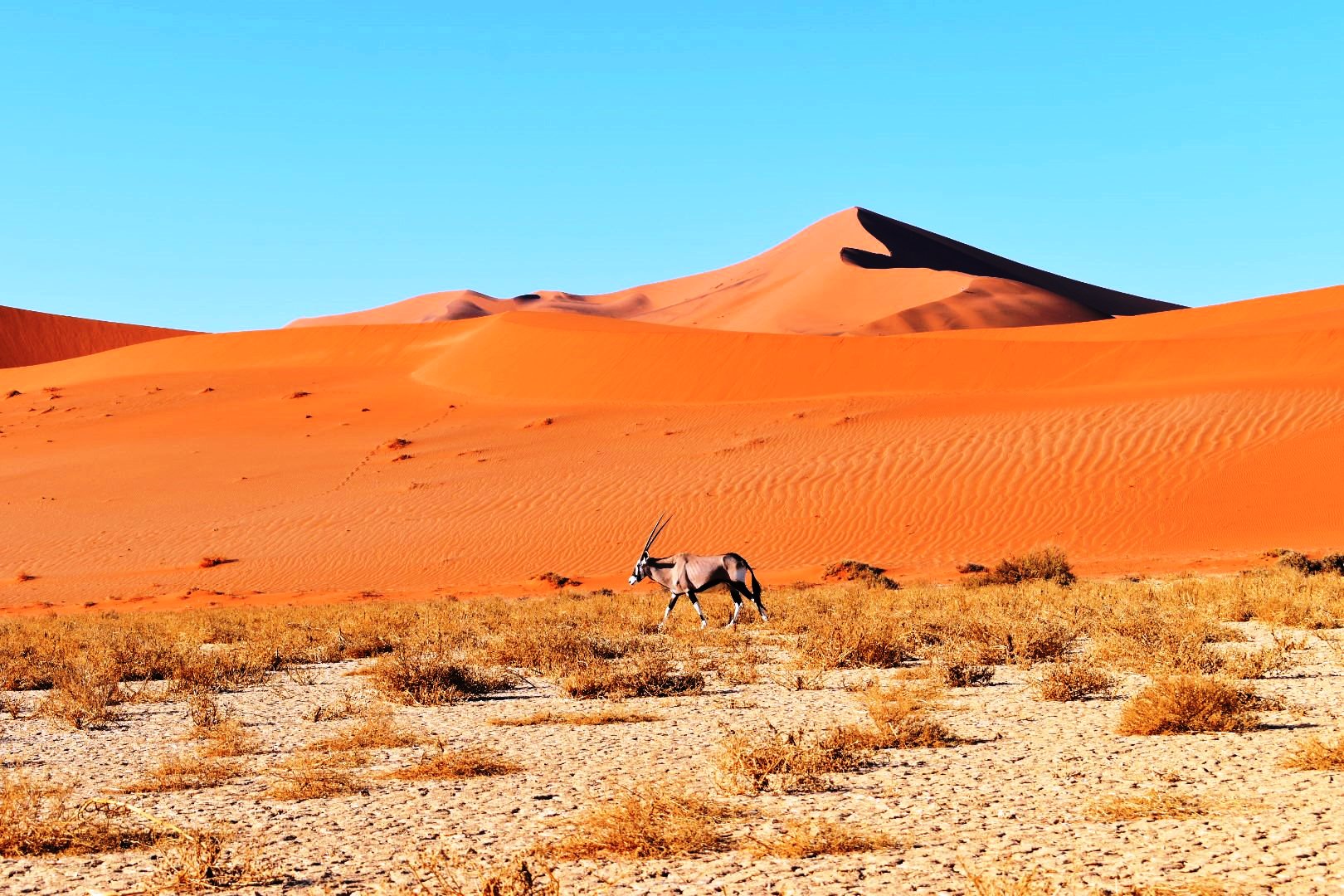
Experience the contrasting landscapes of Namibia, with the awe-inspiring Fish River Canyon, the surreal Namib Desert and the majestic mountains of Damaraland, along with vibrant cultures.
Thrill to the excitement of wildlife safaris in renowned game reserves, where you’ll have the opportunity to witness incredible creatures in their natural habitat. Namibia offers an unforgettable adventure for every traveller, promising a truly remarkable journey.
From NZ$15,855 per person, twin share
13 Days / 12 Nights • Set departures 2026–2027 • Namibia
2026 13, 20, 27 Oct · 3, 10, 17, 24 Nov · 1, 15, 29 Dec
2027 5, 19 Jan · 2, 16 Feb · 2, 9, 16, 23, 30 Mar · 6, 13, 20, 27 Apr · 4, 11, 18, 25 May · 1, 8, 15, 22, 29 Jun · 6, 13, 20, 27 Jul · 3, 10, 17, 24, 31 Aug · 7, 14, 21, 28 Sep · 5, 12, 19, 26 Oct
Price quoted is a lead-in rate. As pricing may vary seasonally and according to standard/category selected, please contact us for a quote on your specific requirements.
Wildlife journey. Let us tailor-make your itinerary to include travel arrangements before and/or after your stay.
Who this suits
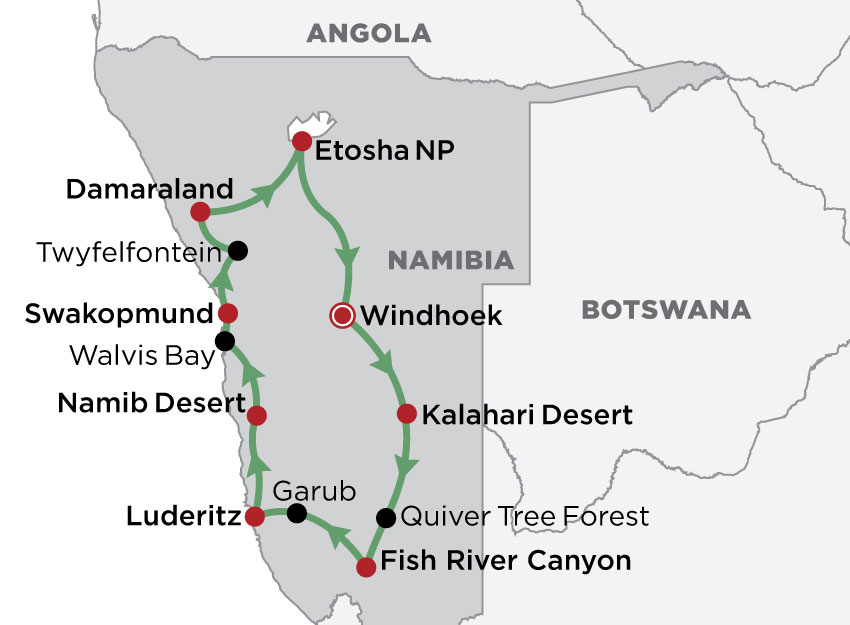
A guided tour by minibus on set departures — the full loop of Namibia for travellers who want the south (the Kalahari, Fish River Canyon, Lüderitz) as well as Sossusvlei, Swakopmund and Etosha.
Good to know
Departures run with a bilingual English/German-speaking driver-guide and need a minimum of two guests to operate. Day 13 ends at Windhoek airport in time for flights departing after 7pm.
The journey
Day by day
Day 1 — Windhoek › Kalahari Desert
Leaving Windhoek, travel into the enormous sand mass known as the Kalahari Desert that crosses over Namibia, Botswana and South Africa. The Kalahari is a vast semi-desert of wind-blown sand held by a sparse mantle of thorn scrub making it the most extensive continuous stretch of sand covering nine African countries. Unlike other true deserts, the Kalahari does receive erratic rainfall. For many, “thirstland” is a more fitting description.
Lacking permanent surface water, the Kalahari is a challenging place to live except for those who have adapted to not only survive but flourish here. The Bushmen refer to it as the “Soul of the World”. With its deep red dunes and endless grass plains interspersed with acacias and shrubs, it is still home to a surprisingly large amount of specially adapted wildlife. Enjoy the opportunity to experience the red dunes and wildlife in this desert environment on a nature drive.
Day 2 — Kalahari › Fish River Canyon
Continue south through arid and extensive rocky plains. Visiting the unique Garas quiver tree forest you are welcomed by quirky human-made sculptures of scrap metal which set a contrast to this serene, timeless space. Quiver trees and aloes nestle amongst huge dolerite boulders, stacked mysteriously – the area is also aptly referred to as a “Giant’s Playground”.
Continue to our lodge, situated in close vicinity to the Fish River Canyon. Here we can explore the area on foot or an optional guided nature drive in the later afternoon highlighting the quiver trees, rugged landscape, and impressive sweeping rock formations.
Day 3 — Fish River Canyon › Luderitz
Start your morning on the edge of the Fish River Canyon where you will gaze into this magnificent geological phenomenon. The canyon is located in the northern part of the Nama Karoo and is the second largest canyon on earth, featuring a gigantic ravine that measures in total about 160 km long, up to 27 km wide and in places almost 550 metres deep. The Fish River is the longest interior river found in Namibia, but its current flow is just a drop compared with the immense volume of water that poured down its length in ages past.
Continue your journey past the Naute dam, stopping briefly at the Naute Kristall Cellar and Distillery, to optionally taste some of the unique liquors or simply enjoy a delicious cup of coffee. Proceeding onwards you head to the coastal town of Luderitz. On the way to Luderitz, stop at Garub, viewing point for the Wild Horses of the Namib Desert. Arriving in Luderitz head towards the coastline taking a scenic route along the “Grosse Bucht”, enjoying the fresh sea breeze, and a stop for a quick picnic before returning to town.
Day 4 — Luderitz › Namib Desert
After an early breakfast, your morning starts with a visit to Kolmanskop ghost town. Kolmanskop is a deserted diamond mining town in the Sperrgebiet National Park. Once an opulent and decadent town, a monument to the diamond boom and built to last…until the diamonds ran out. Today Kolmanskop stands as a haunting monument to the thriving past, offering visitor’s unique glimpse into a bygone era.
Continue across vast open plains, stopping in the countryside town of Helmeringhausen before continuing further north along the Tiras Mountain range to your lodge in the Namib Desert. You are located close to Sesriem, the gateway to Sossusvlei, Dead Vlei and Sesriem Canyon, with some of the highest dunes on earth towering over the white desert plains. The afternoon can be spent relaxing by the sparkling pool, enjoying the vast open desert plains, or participating in optional activities offered at the lodge.
Day 5 — Namib Desert
The morning demands an early start. Entering the Namib Naukluft National Park at sunrise, the first rays of sunlight paint the mountains of sand into a variety of apricot, red and orange hues, contrasted against a crisp blue skyline, enrapturing your senses, and providing an opportunity to capture this impressive landscape on film. You will be captivated by the surreal Deadvlei surrounded by some of the highest dunes on earth and Sossusvlei, where the dry Tsauchab River ends abruptly amongst dunes.
Take the opportunity to walk up one of these majestic dunes to admire the desert landscape beneath. Later, visit the Sesriem Canyon, a life-sustaining natural phenomenon in the heart of the Namib Desert.
Day 6 — Namib Desert › Swakopmund
After breakfast, continue your journey approaching the little settlement of Solitaire on the edge of the Namib Naukluft National Park, feeling like you have arrived in the middle of nowhere. Here it is worthwhile to enjoy a cup of coffee with the delightful apple pie, written about in so many travel books, before travelling via the desolate, rolling hills of the Kuiseb Valley towards the Atlantic Ocean. Reaching the coastal harbour town of Walvis Bay, visit the shallow lagoon, one of the most important wetland areas on the African continent and a RAMSAR World Heritage Site. Over 80% of Africa’s lesser flamingos breed in this lagoon and present a breath-taking picture when they appear in groups.
Continuing along the scenic route between the dune belt and the Atlantic Ocean you will reach Swakopmund, where the rest of the day is spent at leisure. With palm-lined streets and seaside promenades, Swakopmund is a popular holiday destination in Namibia. Its pleasant summer climate and long stretched beaches attract anglers and surfers from all over southern Africa. For the international guest, Swakopmund is a bohemian mix of German architecture and African rhythms, a laid-back attitude with adrenalin activities, misty mornings, and desert heat.
Day 7 — Swakopmund
Swakopmund is often fondly referred to as the “playground of Namibia”, with numerous activities ranging from adventure to exploring the fascinating features of the Namib Desert and the animals and plants that survive here. Embrace the relaxed pace of this idyllic coastal town while enjoying coffee and freshly baked pastries in one of the many cafés. Alternatively explore the rugged, sweltering desert on a day tour, or view this awesome environment from the air on a scenic flight.
More extreme adventures include skydiving over the desert or quad biking and sand boarding on the dunes. Take time to get the feel of this quaint town with its historic buildings, museums, shopping arcades and beach bar that have created an atmosphere with vibrant use of colour and a bohemian vibe. Today, you will enjoy an included catamaran marine cruise with fresh oysters and sparkling wine.
Day 8 — Swakopmund › Damaraland
Today your journey continues through Uis past the Brandberg, Namibia’s highest mountain (2579 m), into Damaraland, one of the least populated and most geologically diverse areas in Africa. This harsh, rocky environment is home to the elusive desert elephant, the black rhino and free-roaming antelope species. We arrive at our lodge in the afternoon, where we have the remainder of the day at leisure.
Day 9 — Damaraland
On an early morning scenic nature drive through the untouched wilderness area of the Otjimboyo Concession, you head out towards Brandberg. This is the best time to capture the perfect light of sunrise and catch the last mist engulfing the mountain. Continue down into the dry Ugab riverbed, which you will then follow back towards the camp. Stopping under one of the majestic camelthorn trees enjoy a light picnic lunch. On your drive along the meandering river, you might encounter the elusive desert elephant that roam the dry riverbeds of the Damaraland, feeding on the nutritious pods of the trees lining the riverbanks.
Day 10 — Damaraland › Etosha National Park
During the cooler hours of the morning, start your adventure-filled day in the company of a local Damara guide, who takes you to Twyfelfontein, a UNESCO World Heritage site where Bushman communities engraved and painted over 2,500 pictures some 6,000 years ago!
After a visit to the nearby Living Museum of the Damara, proceed to the Petrified Forest – a geological phenomenon depicting the creation and metamorphosis of wood into stone amongst some of the oldest land masses on earth. Here you will also see the Welwitschia mirabilis plant – the oldest living desert plant on Earth. The onward journey takes you to the wildlife heaven of Namibia – Etosha National Park. Check into our lodge located on the border of the Etosha National Park and unwind after the adventure-filled day alongside the pool.
Day 11 — Etosha National Park
The day is devoted purely to the abundant wildlife found in Etosha National Park which surrounds a parched salt desert known as the Etosha Pan. The park is home to four of the Big Five – elephant, lion, leopard and rhino. The park was proclaimed as Namibia’s first conservation area in 1907 by the then Governor, von Lindequist. Despite the size of Park, only the southern edge of the pan is accessible to visitors. Game viewing in the park is primarily focused around the waterholes, some of which are spring-fed and some supplied from a borehole, ideal places to sit and watch over 114 different species, or for an avid birder, more than 340 bird species.
Popular game species such as giraffe, blue wildebeest, plains and mountain zebra, hyena, lion, leopard, antelopes such as kudu, oryx, eland, as well as some of the endangered species such as black rhino, cheetah and the black-faced impala are all found here. An extensive network of roads link the over 30 water holes allowing visitors the opportunity of a comprehensive game viewing safari throughout the park as each different area will provide various encounters.
Day 12 — Etosha National Park
Today your guide again takes you on a half-day game drive in Etosha National Park. You may encounter animal species you have not seen the previous day and look forward to any new surprises at the different waterholes visited. The Etosha Pan dominates the park. This salt pan desert, which is nearly completely enclosed by the park and is lined by numerous watering holes, is roughly 130 km long and as wide as 50 km in places. During Etosha’s notorious dry spells the pan is a deathly place, lying parched and cracked under the molten African sun. It is claimed that game viewing is best during the dry periods as animals will then congregate closer to water. But even in the rainy season, the park remains an abundant wildlife haven. You then have the pleasure of experiencing the rebirth of life as the young foals, cubs, and chicks are seen frolicking with their parents, and the sprouting new green shrubs and grasses create a pleasing green oasis. Return to your lodge in the afternoon, where the rest of the day and evening are yours to enjoy at leisure.
Day 13 — Etosha › Windhoek
After breakfast, you will travel back through the centre of Namibia’s bushland savannah to the capital in the centre of the country. Time permitting, a stop may be made en route at the famous wood carvers’ market in Okahandja or the craft market in central Windhoek to pick up the last few souvenirs. Windhoek is a cosmopolitan melting pot of European architecture with African culture, with a variety of excellent restaurants to choose from.
You will be dropped off at your overnight hotel or transferred to the airport for your onward flight departing after 7:00 pm.
Pricing • New Zealand dollars, per person
By season and category
Price quoted is a lead-in rate. As pricing may vary seasonally and according to standard/category selected, please contact us for a quote on your specific requirements.
What’s included
- 12 nights’ accommodation
- Bilingual English/German-speaking registered driver/guide
- 12 breakfasts and 10 dinners
- Mineral water onboard the minibus
- Transfers and sightseeing as per the itinerary
- Entrance fees and activities as per the itinerary
- 24-hour medical evacuation insurance
- Tourism levies and taxes
- Porterage
Not included
- Gratuities
Booking conditions
Booking conditions as supplied by World Journeys.
- Pricing varies due to fluctuations in exchange rates; please contact us for current pricing or other changes
- A minimum of two guests is required for a departure to operate
Journey operated by World Journeys and booked through Fine Travel.
The Fine Travel Difference



A trusted travel agency since 2000 • TAANZ • CLIA • IATA Accredited
The whole trip, one booking
We arrange your international and regional flights alongside your journey — in whichever cabin suits — with stopovers, travel insurance and the rest of your time in Africa, so it’s all priced, ticketed and looked after together.
Why book through us
An African itinerary takes significant co-ordination: international airfares, hotels, game reserves, internal transfers and flights. Booking through Fine Travel, you benefit from partners on the ground who have been chosen and tested over many years by our specialist partners — and you deal with one TAANZ-accredited agency in New Zealand.
One consultant, first call to home again
Your Fine Travel consultant looks after your enquiry and your booking from the first conversation to your return, with the operator’s on-the-ground partners behind the journey itself.
Plan your journey with Fine Travel
Talk to Fine Travel
Book your journey on its own, or let us add your flights and the rest of your time in Africa.
Tell us the journey — or just the idea.
Or call us on 0800 00 34 63