Last refreshed: 2 July 2026
A discounted Business Class airfare buys the same seat, in the same cabin, on the same aircraft. So what does the discount actually reflect — and is there anything you genuinely give up?
The release of discounted Business Class flights provides travellers from New Zealand with a wide variety of choices. The challenge can sometimes be finding the special that works best for you. But does picking up a discounted Business Class airfare mean you have to miss out in other ways?
This article looks at whether the discount itself changes what you experience on board. If you’re weighing up the separate question of the consistently cheapest airlines — their routes, stopovers and schedules — that’s covered in Pros and Cons of Cheap Business Class Flights to the UK and Europe.
What’s driving the Business Class discounts?
Airline competition really benefits travellers to the UK & Europe, and to a degree North America (competition between Air New Zealand and Qantas has become more intense). Interestingly, rather than “low-cost carriers” driving Business Class prices down, the discounts are primarily driven by intense competition between established carriers and sharp lead-in fares from the likes of China Southern and Asiana.
In our article When is the Best Time to Book a UK / Europe Business Class Airfare? we go into more detail on the type of specials each of the major airlines adopts for the UK & Europe market, and how that influences a decision on when to book.
Is a discount just a reward for booking at the right time?
Largely, yes. In our blog Plan Ahead for Discounted Business Class Flights to the UK & Europe we cover how airlines release discounted Business and Premium Economy booking classes — through Earlybird launches and Rolling Specials — and how the cheapest booking classes sell out as high season approaches.
One of the first applications of the internet to booking airfares was as a channel for airlines to release last-minute distressed inventory at a substantial discount. That approach influenced traveller behaviour, with purchasing decisions delayed in the hope of a better airfare. As airline revenue management became more sophisticated, pricing moved to a model that rewards passengers who book early and charges last-minute travellers a premium (as they generally have a strong motivation to travel).
Obtaining a discounted Business Class or Premium Economy airfare is therefore about working with your Fine Travel Consultant to understand the best time to book — as a rule, the discount doesn’t reflect a substandard product or missing out on some aspect of the premium cabin experience. There is, however, one notable exception worth knowing about.
Can a discounted fare exclude Business Class benefits?
In some cases, yes — and Qatar Airways is the clearest example. Unlike most airlines, Qatar Airways discounts its Business Class by unbundling benefits that are otherwise considered standard. Its cheapest fare family, Business Class “Lite” (P Class), charges extra for seat selection and lounge access, and accrues Qmiles at a reduced rate. The next tier up, Classic (R Class), includes lounge access but still charges for seat selection — with the full benefits reserved for the Comfort and Elite fare families.
We unpack the full structure in Qatar Airways Adjusts Discount Business Class Benefits to the UK and Europe. In practice we see very few Lite fares released on flights to the UK and Europe, and depending on the price difference, booking the fare with the full benefits is often the easy solution. The lesson is simple: when comparing discounted Business Class fares, it’s worth asking exactly which fare family — and which benefits — the price is based on. That’s a question your Fine Travel Consultant answers before you book.
Is the food consistently good in Business Class?
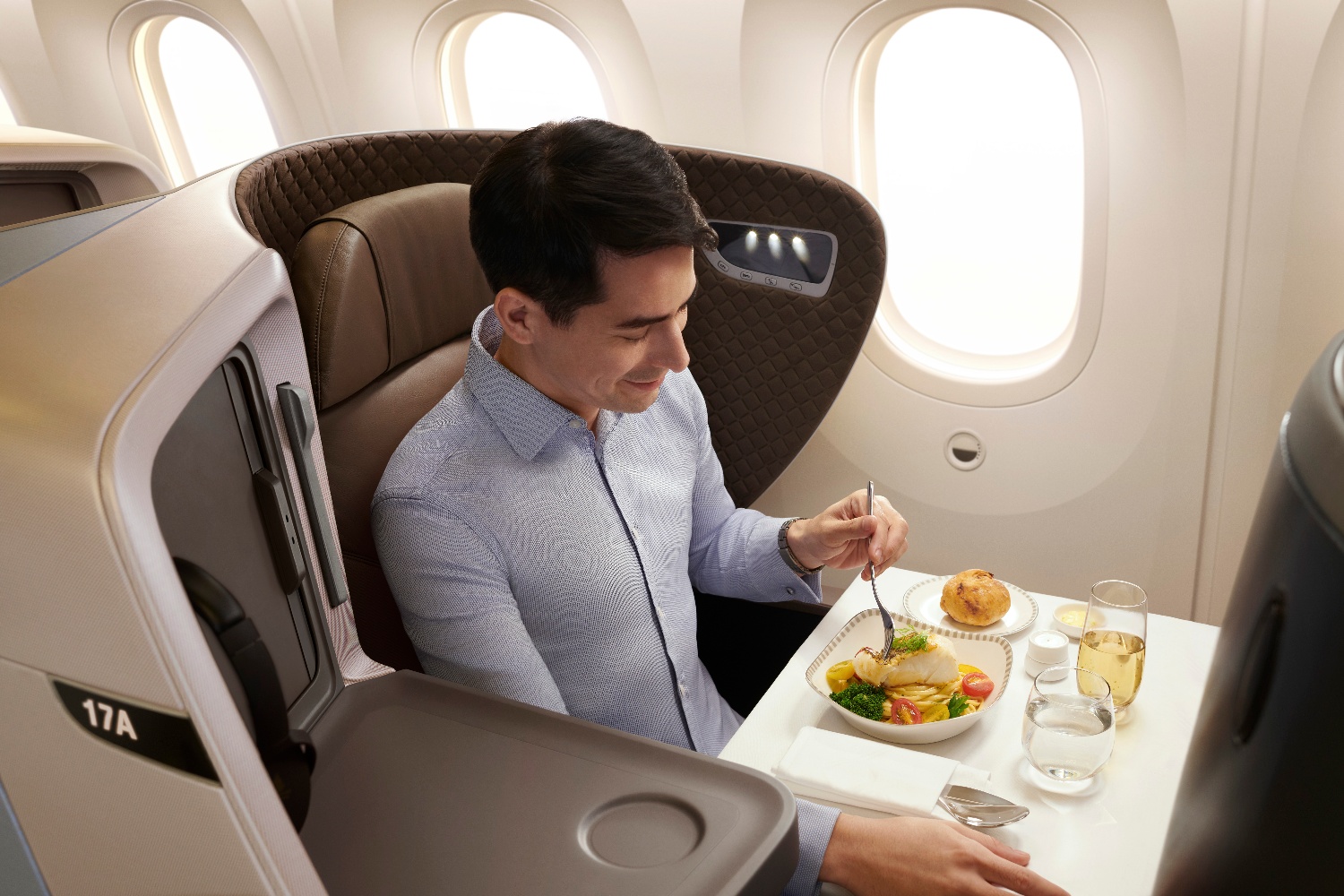
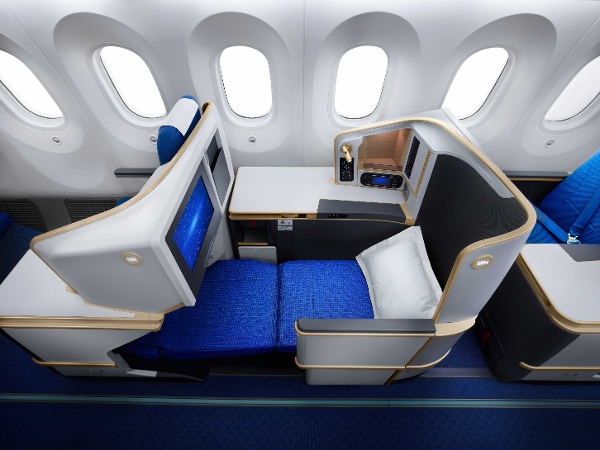
Singapore Airlines Business Class aboard the Boeing 787-10
The airlines considered “true premium” carriers (like Emirates, Qatar Airways and Singapore Airlines) offer a point of difference in the quality of the food and wine on board. Some airlines (like Singapore Airlines and Qantas) collaborate with celebrity chefs to enhance the onboard experience, and Singapore Airlines has its Book the Cook service.
Our feedback from clients (and Fine Travel Consultants) who have flown with China Southern and Asiana — two examples of airlines with sharp lead-in fares — has been consistently positive. We share an example menu from China Southern in our review of their Business Class. The quality and range may not be to the same standard as Emirates, but it isn’t “low cost inedible”.
That’s not to say every Business Class and Premium Economy meal will match a top restaurant on the ground. But if the onboard culinary experience is important to you, it’s important to fly with a true premium carrier — and that’s a choice of airline, not a consequence of the discount.
Do you miss out on frequent flyer recognition?
This is a tricky one, with the unfortunate answer of “it depends”. Generally, if the airline you are travelling with is part of the same frequent flyer alliance as the airline you hold membership with, you should receive recognition — but not always. How much recognition depends on the airline, and often on how deep the discount on the Business Class airfare is.
The most common trap is that some airlines offer discounted Business Class in a booking class that doesn’t accumulate frequent flyer points. So although you’re travelling in Business Class, you don’t get recognition for it. Alliance membership can shift too — the Korean Air / Asiana merger is reshaping the Star Alliance picture for New Zealand travellers, which we cover in the frequent flyer section of Pros and Cons of Cheap Business Class Flights. If points or Status Points matter to you, ask your Fine Travel Consultant to check the earning rate of the specific booking class before you book.
So what are the genuine downsides?
The good news is that you will generally enjoy the core elements of a Business Class experience. The biggest differences to be aware of:
A longer journey. You might have an extra connection via Australia, and then another stopover or transit before reaching your final destination — sometimes with longer connection times.
The seat, on rare occasions. Airlines flying from New Zealand to Europe generally offer lie-flat Business Class seats as standard, but on rare occasions a sector between an airline’s hub and your final destination may have an angled lie-flat seat.
Service polish. The onboard service, cuisine and wine selection may not have the polish, selection or true quality of a premium airline.
Communication. It may be less smooth where English is not the main language spoken on board.
Notice what’s not on that list: the seat you sit in, the cabin you fly in, or the fundamentals of the Business Class experience. If the idea of being squeezed into an Economy Class seat all the way to London makes your stomach turn, the entry-level pricing for Business Class becomes appealing — and you may be surprised by what’s on offer.
Fly Business Class with Fine Travel
The same seat, for less
Compare current discounted Business Class and Premium Economy fares — or tell us your dates and we’ll check which discounted booking classes are available.